Saltwater Fishing

Saltwater Fishing

Sunday, November 26, 2017


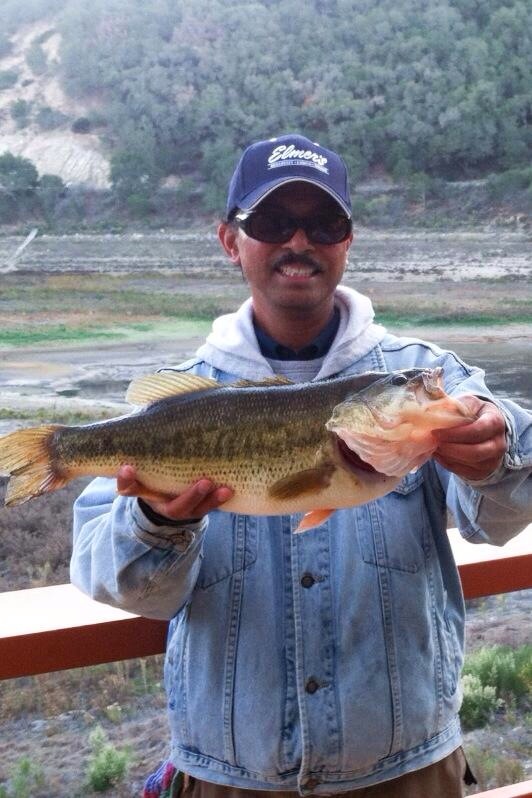
Caught bass on the ultralight this weekend. The two biggest, (above), came on 4 lb. and 2 lb. test, respectively. The larger fish ate a #12 red nymph, the other ate a crappie jig. Both were released sadder but wiser.

My grandson, Waylon, caught his first fish ever yesterday. It took less than a minute after his first cast. I'm sure there will be many more in this boy's future.

Faith and Brody learned to dropshot flies today as did several kids this weekend, some of whom caught their first fish ever.

Thursday, August 24, 2017

Facebook Posts


Facebook posts have become a sort of fishing journal. This post from August 24th, 2015, shows me that if I go to Lake Cahuilla today, the Carp will likely be feeding on algae. Any green fly should get eaten. 

Yesterday, the amurs and commons were feeding on algae so close to shore that their backs were often out of the water. When they're this shallow, they spook really easily. So, I had to stand very still in the shadows of trees and wait for one to come close enough to cast to it. When they're being this selective, you really have to put the fly right in front of they're nose, and when they suck it up, you have about a millisecond to set the hook before they realize it's not algae and spit it out. I also caught some on the bait rod, (semolina dough w/ peanut powder). It was 111°!

Sunday, November 13, 2016

Amur Carp

Amur Carp, (or grass carp), were introduced into the United States in the early 1960s as a way to control aquatic vegetation in ponds, lakes, and streams. Because of their very specific reproductive needs they don't pose a threat of becoming over abundant in most waters, unlike their other Asian Carp cousins. They can grow up to 90 lbs, but because of their primarily herbivorous diet, can be difficult to catch. Through experimentation, however, I've come up with a dough bait that they seem to love. I often catch up to two dozen in a day at Lake Cahuilla near Palm Springs where I live. (message me on Simply Fishing with Michael for the recipe)

Thursday, September 1, 2016

"Mudding"

On a recent trip to Santa Fe, New Mexico, I stopped by Cochiti Lake to see what I could see. I came across a cove where large carp were "mudding" fairly close to shore. "Mudding" is when carp are feeding on the bottom kicking up clouds of mud as they swim along.With their noses down and clouds of mud surrounding them, they are not easily spooked and are fairly easy to catch. All you have to do is cast a fly right in their path and wait for them to swim along and suck it up. You'll usually have just a second to set the hook before they spit it out, but adding a little Pro-Cure crayfish scent, or even anise extract to your fly will make them hold on a little longer. Two of the carp I caught were over 28" long. Good fun!

Thursday, December 10, 2015

Stopped by the F dock on my brief visit to the Central Coast on Thanksgiving. There are still big bass right under the dock, even though there's only about eight feet of water beneath it.


Saturday, August 1, 2015

I haven't posted much since I moved to the desert because I haven't been able to fish much. There are no lakes very close and when I can fish, I usually only have a few hours. I have found a lake about an hour away that holds some big Amur and common carp. I will post soon on some techniques I use to catch them. I also found a small pond on an abandoned golf course that holds some bass and bluegill.

Monday, November 4, 2013

Trout Plant

This is the time of year when they start planting trout in all the lakes, (except Lopez), and Diamond Valley planted some monsters. There were several cruising the shoreline in the third cove to the right. I broke one off on 2 string, (dropshotting flies), so I bumped up to 6 string. That rod had just nightcrawler and a splitshot, #6 mosquito hook. I reeled in fast just past the nose of this guy, and he turned and attacked it. After a lengthy fight, the other fish disappeared.

(Without polarized lenses, I would have never known these fish were there)

Monday, October 14, 2013

Shad

Just in case you didn't know, Fall may be your best bet to catch big fish. One of the reasons for this is that shad will migrate to shallow water to spawn. Bass, stripers, trout, crappie, catfish, even large redear and bluegill will eat shad. The shad will usually lay their eggs on wood, so you can expect them to congregate near docks, logs, submerged trees, etc. The threadfin shad is the most common baitfish in California reservoirs. Shad imitation lures, of course, will work well at this time, (swimbaits, jerkbaits), and of course, nothing is more exciting than seeing a big bass smash a topwater lure on a calm lake. I love the Lucky Craft Waketail and Sammy lures for topwater fishing. Another technique that I love, especially if I want to make sure a friend catches fish, is flylining live shad. If you don't have a fluorocarbon shad net, (who does?), it's pretty easy to snag shad. Just tie on a couple of small, thin, treble hooks above a skinny dropshot sinker, with light fluorocarbon line, and jig it through the school of baitfish. If your hook is too heavy, you will kill the shad and it will not be an effective bait. An injured shad gives off a distress signal which is like ringing a dinner bell for gamefish. A dead fish does nothing unless you work it like a soft jerkbait. Hook the shad through the bottom lip and up through the nose on a #6 mosquito hook, or a #8 Gamakatsu  baitholder hook. The thinner the hook the better for keeping your bait alive, but a large fish may bend or break a thin hook. Yesterday, I hooked about a 5 lb. fish that broke a fine fly hook on which I had impaled a large minnow.  It's important to use 8# test or lighter to cast a shad or minnow with no weight. If you see boils, cast past them and reel your bait into the strike zone, (so you don't spook the fish), Make sure there is plenty of slack in your line. When your line starts to move out, don't set the hook right away. Wait until your line is almost straightened out before you set the hook, this will give the fish time to take the bait all the way into his mouth. If you don't get bit right away, lift your rod tip quickly, then let your bait freefall. This will often get their attention. Retie your hook frequently as that knot will be the most likely place where your line will break. Don't know where the shad are? Look for grebes. If there are shad in your lake, the grebes will know where they are. Also, be sure to wear polarized sunglasses. They will allow you to see the schools of shad as well as the predator that eats them. Good luck, and fish on!

Flylining Minnows


Yesterday, I went to Diamond Valley Lake because I heard they were going to plant trout. They didn't. But as I was walking on the trail toward the east dam, I could hear splashing on the shoreline. So, I took a trail to the waters edge and saw thousands of silverside minnows packed tightly to the shoreline, and schools of largemouth gorging themselves violently on the little buggers. I had an ultralight rod set up for dropshotting flies, so I tossed it into the school of minnows, (they will eat a fly if it's small enough), and snagged one right away. I nose hooked the minnow with a #6 mosquito hook on 8 lb. fluorocarbon, (no weight), and tossed it into a little space between the stick ups. He immediately started swimming frantically, and there was a loud sucking sound followed by a small whirlpool. My line started moving out fast, so I stepped toward the water and pointed my rod toward the fish to give him more line. As soon as the line got tight, I set the hook and reeled in the first of several bass in the  2 to 3 lb. range. First cast, first fish. Great way to spend a Sunday!

Monday, October 7, 2013

Old School Fishing


I've been catching bass at Diamond Valley Lake on a variety of lures, (including flies), but having my best luck with good old fashioned nightcrawlers. (see post below on Texas Rigging Nightcrawlers)

Wednesday, September 11, 2013

Lopez Lake

I came in 4th at the panfish derby. It was tough fishing in the morning, but after the derby was over, the bite picked up. I hooked and lost a big bass right under the dock, and this morning I stopped on my way back to Palm Springs and caught this guy. Most people don't realize that there are large bass right under their feet. I also caught several catfish and carp this weekend at Laguna Lake in San Luis Obispo. Many people also don't realize they can catch fish all day long in downtown SLO. I was using "peanut butter burritos" for bait, and ultralight gear. Good fun!

Saturday, August 24, 2013

Free Fishing Day/Panfish Derby

Don't forget September 7th is California Free Fishing Day! (no license required). It also happens to be the date of the Lopez Lake Annual Panfish Derby! On another note, I've been catching lots of panfish, trout, bass, and carp, dropshotting nymphs at Lake Hemet. Not big, but there's plenty:)

Sunday, February 3, 2013

First Crappie

Eden and Molly each caught their first crappie today dropshotting nymphs on the F dock.

Friday, January 18, 2013

Trout!

Cachuma Lake reports that the trout bite has picked up this week, with fish up to 7 lbs. being caught. This fish and several others were taken with the floating worm rig described below. The next trout plant is March 19th.

Thursday, January 17, 2013

Splicing Braid To Mono

This knot works fine for the 4 lb. braid to 4lb. fluorocarbon I use on my ultralight rod.

Winter Bass

Still catching big bass on the F dock, and crappie in 40 to 50 feet of water. Some fishermen are catching redear 70 feet deep.

Wednesday, January 2, 2013

Deep Water

The fish seem to have gone deep, but they can still be caught. I've been catching crappie and a few redear in 40 to 60 feet of water. Fishing vertically in the morning, and then casting way on the outside as the day warms up. I've also been catching bass dropshotting worms, (plastic and crawlers).  This behemoth took a fly.

Friday, November 30, 2012

Winter Fishing? (for kids and beginners)


Don't put away your fishing gear just yet. Sometimes the cold weather can produce the most memorable fishing trips. A lot of people quit fishing in the winter because they don't catch fish. It's not that the fish aren't feeding, it's just that they're not where you're used to catching them, and they may not be able to see your lure as well. When the water gets colder, and the days get darker, fish in reservoirs like our Central Coast lakes are more likely to be suspended in deeper water. The cold surface temperatures drive the fish deeper, but the low light penetration brings the zooplankton, and consequently the baitfish, higher up in the water column. Crappie, Sunfish, and Bass will suspend near these depths. In these deeper waters, and darker days, the fish will rely more on their lateral line than their vision to find prey. The lateral line is actually a sense organ which allows fish to detect vibrations in the water. Even a tiny nymph swimming in the lake will create vibrations that tell a fish its size, how fast it's swimming, or if it's injured. Too much vibration could spook the fish. Remember, also, that the colder temperatures will slow their metabolism. So, they won't want to swim too far for a meal. 

The fish are still there. They still have to eat. You just have to find the right depth, and convince them your lure is alive. Fish on!